
What is ‘gaslighting’? For starters, ‘gaslighting’ isn’t just a buzzword—it’s a subtle and dangerous form of abuse. It is a form of emotional and psychological manipulation that causes someone to question their perception of reality. However, the real concern about ‘gaslighting’ is how subtle it can manifest in seemingly casual conversations that we can have with someone, and most importantly, with the people we love.
Where does the term ‘gaslighting’ come from?
‘Gaslighting’ comes from the 1938 stage play Gas Light. In the story, a manipulative husband deliberately dims the gas-powered lights in their home and then insists to his wife that nothing has changed when she questions the flickering. Over time, this constant denial of her reality leads her to doubt her own perceptions and sanity. Though fictional, the play powerfully illustrates a real psychological tactic—one where the abuser systematically erodes the victim’s sense of truth and self-trust. Today, ‘gaslighting’ has become a widely recognized term for this insidious form of emotional manipulation, often found in personal relationships, workplaces, and even broader social dynamics
Why is gaslighting serious?
‘Gaslighting’ is an extremely effective form of abuse that causes a victim to question their own feelings, instincts, and sanity. As a result, the abusive partner has a lot of power. Once a controlling partner has broken down the victim’s ability to trust their own perceptions, the victim is more likely to stay in the relationship, which is extremely alarming and can further perpetrate abusive dynamics.

Warner Bros. Home Entertainment
It is also important, however, to note that the person that ‘gaslights’ often is not intentionally doing so. It is a form of self-preservation. It is connected to a need to ‘be right’ while my partner is ‘wrong.’ Being ‘always right’ gives the ‘gaslighter’ the upper hand and maintains his/her ‘one-up’ status in the relationship dynamic. Overtime the victim’s sense of self and cognitive abilities deteriorate, making them easier to manage/manipulate.
Here are some common ‘gaslighting’ approaches and how they manifest in phrases:
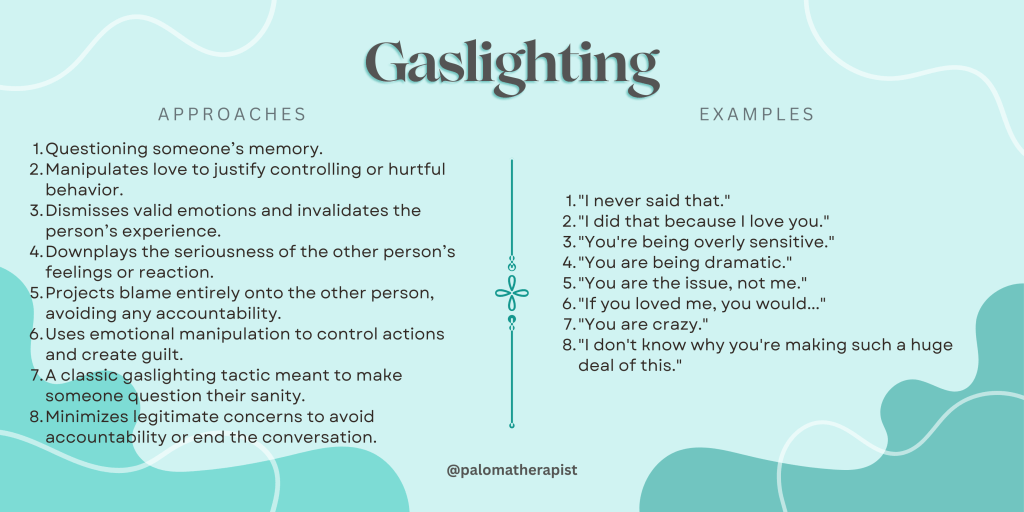
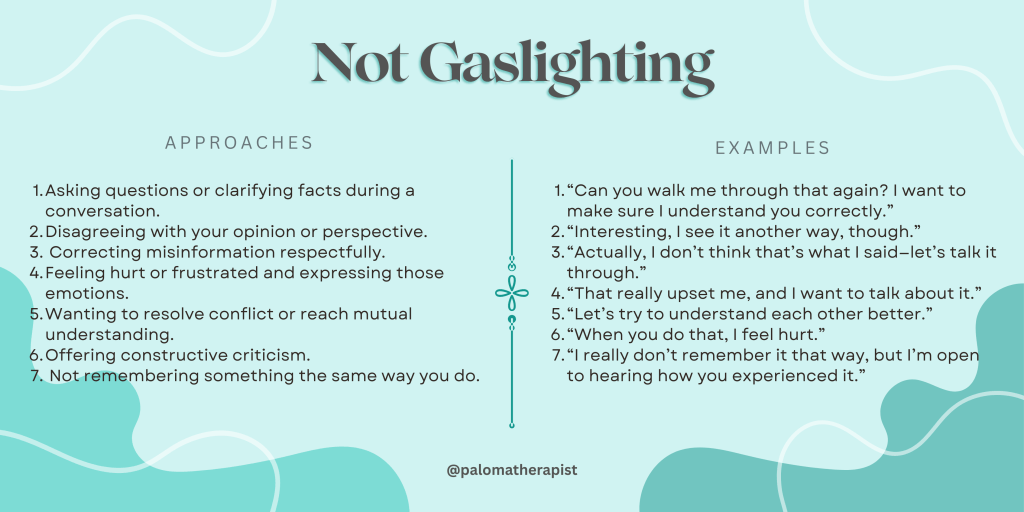
However, not every disagreement, criticism, or emotional reaction qualifies as ‘gaslighting’. Here are some behaviors that are not gaslighting:
How can gaslighting feel for the victim?
Victims of ‘gaslighting’ often find themselves trapped in a confusing emotional landscape where reality feels unstable and self-trust erodes. Some common experiences include:
- Doubting their own memory or perception of events, even when they initially felt sure of what happened.
- Frequently second-guessing themselves, wondering if they’re overreacting or imagining things.

- Feeling “crazy” or irrational, especially when the abuser insists they’re being dramatic or too sensitive.
- Losing confidence in their own judgement, often leading to feeling of worthlessness or incompetence.
- Apologizing constantly, even when they’re not at fault, in an effort to avoid conflict or soothe tension.
- Justifying or defending the abuser’s behavior, especially when questioned by concerned friends or family.
- Becoming isolated from others, withdrawing out of shame, confusion, or a growing dependence on the abuser’s version of reality.

How can you respond to gaslighting?
- «My feelings and reality are valid. I don’t appreciate you telling me that I am being too sensitive.»
- «Don’t tell me how to feel. This is how I feel.»
- «I am allowed to explore these topics and conversations with you. Do not tell me I am being dramatic.»
- «I know what I saw.»
- «I will not continue this conversation if you continue to minimize what I am feeling.» (Then, implement the boundary.)
‘Gaslighting’ isn’t just about disagreement—it’s about control.
It involves repeated manipulation that makes someone question their reality, memories, and sense of self. While healthy relationships allow for differences in opinion, ‘gaslighting’ erodes trust, self-worth, and emotional safety. Recognizing the signs is the first step toward setting boundaries, reclaiming your voice, and healing from emotional harm.
 Best Me Therapy